
Introduction
Environmental Product Declarations (EPDs) are changing how the construction industry measures and reports environmental impact. An EPD is a standardized document that shares transparent information about the environmental footprint of a construction product throughout its entire lifecycle. From cement to glass facades, EPDs help manufacturers prove their materials are sustainable and help builders earn green building credits like LEED.
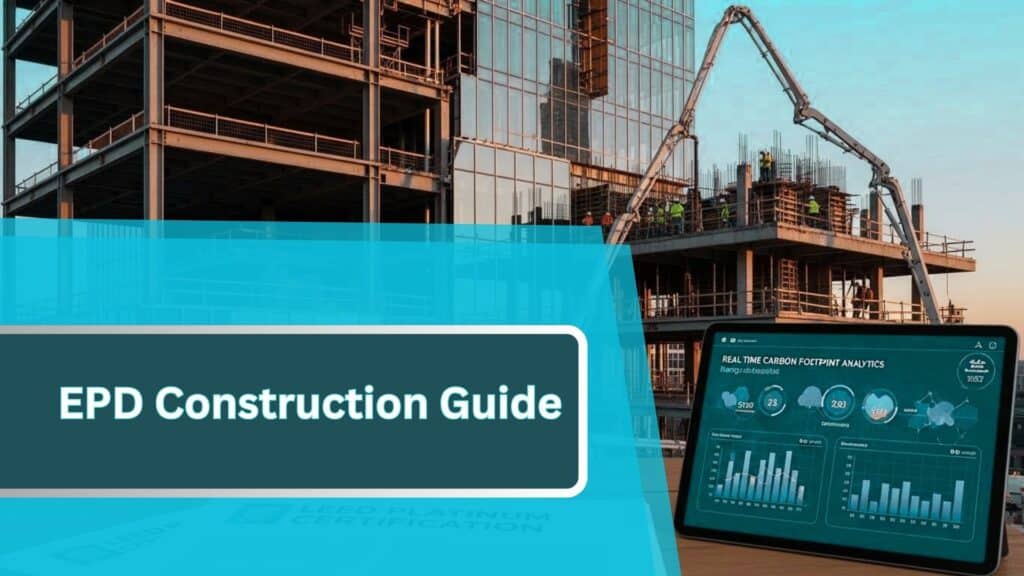
This guide explains what EPDs are, why they matter, and how they work for major construction materials including concrete, steel, aluminum, glass, and insulation.
What is an Environmental Product Declaration?
An EPD works like a nutrition label for building materials. It shows the environmental impact of a product from raw material extraction to end of life. The document includes data on carbon emissions, energy use, water consumption, and waste generation.
EPDs follow strict international standards like ISO 14025 and EN 15804. This means every EPD uses the same rules and methods. Third-party verifiers check the data to ensure accuracy. Because of these standards, architects and builders can compare different products fairly.
Why EPDs Matter in Construction
The construction industry produces about 40% of global carbon emissions. Building owners and developers now demand proof that materials are sustainable. EPDs provide that proof with verified environmental data.
Green building certifications require EPDs too. LEED certification awards points when projects use products with EPDs. Similarly, programs in the UAE and Saudi Arabia are making EPDs essential for sustainable building projects. Understanding Environmental Product Declarations for LEED certification helps manufacturers and builders navigate these requirements.
“EPDs have become the universal language of sustainable construction. When a manufacturer publishes a verified EPD, they’re making a public commitment to transparency and environmental responsibility. This isn’t just about compliance—it’s about transforming the industry.”
How EPDs Work
Creating an EPD starts with a Life Cycle Assessment (LCA). The LCA examines every stage of the product’s life:
- Raw material extraction
- Manufacturing and processing
- Transportation and distribution
- Installation and use
- End of life disposal or recycling
After completing the LCA, the manufacturer submits data to a program operator. An independent verifier reviews everything. Once verified, the EPD gets published in a public database. Most EPDs remain valid for five years before requiring an update. For detailed steps, see our guide on how to get an Environmental Product Declaration in the UAE.
Cement & Concrete EPD: Reducing the Biggest Carbon Source
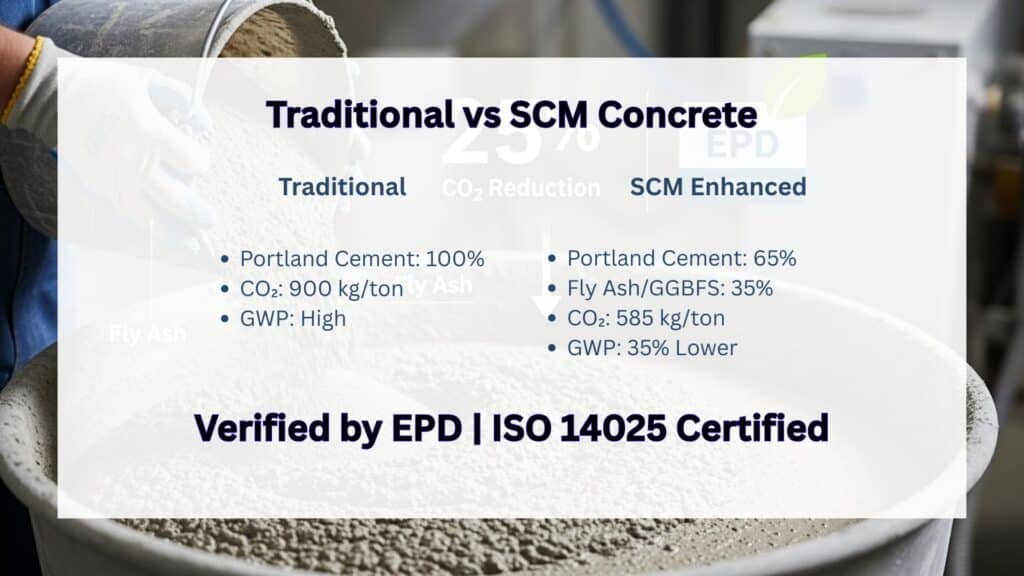
Concrete stands as the world’s most-used construction material. It also creates the highest carbon emissions in building projects. Traditional concrete production releases about 900 kg of CO2 per ton. This massive carbon footprint comes mainly from cement production, which requires heating limestone to extremely high temperatures.
Understanding Concrete's Environmental Impact
A concrete EPD reveals the Global Warming Potential (GWP) throughout the material’s lifecycle. The document breaks down emissions from:
- Cement clinker production (the biggest contributor)
- Aggregate mining and processing
- Mixing and transportation
- Curing and finishing
However, concrete EPDs also show opportunities for improvement. Manufacturers can dramatically reduce emissions through smart material choices.
The concrete used in the Three Gorges Dam in China released more CO2 during construction than some small countries produce in an entire year. However, modern low-carbon concrete with verified EPDs can reduce these emissions by up to 70%. One cubic meter of traditional concrete produces about 300 kg of CO2, while optimized mixes drop this to under 100 kg.
Supplementary Cementitious Materials Lower Carbon
Supplementary Cementitious Materials (SCM) replace a portion of traditional Portland cement. Common SCMs include fly ash, ground granulated blast furnace slag (GGBFS), and silica fume. These materials are often industrial byproducts, giving them lower embodied carbon than new cement.
Using 30-40% SCM in concrete can cut carbon emissions by 25-35%. This reduction shows clearly in product-specific EPDs. Contractors working on LEED projects actively seek concrete with verified SCM content because it earns valuable certification points.
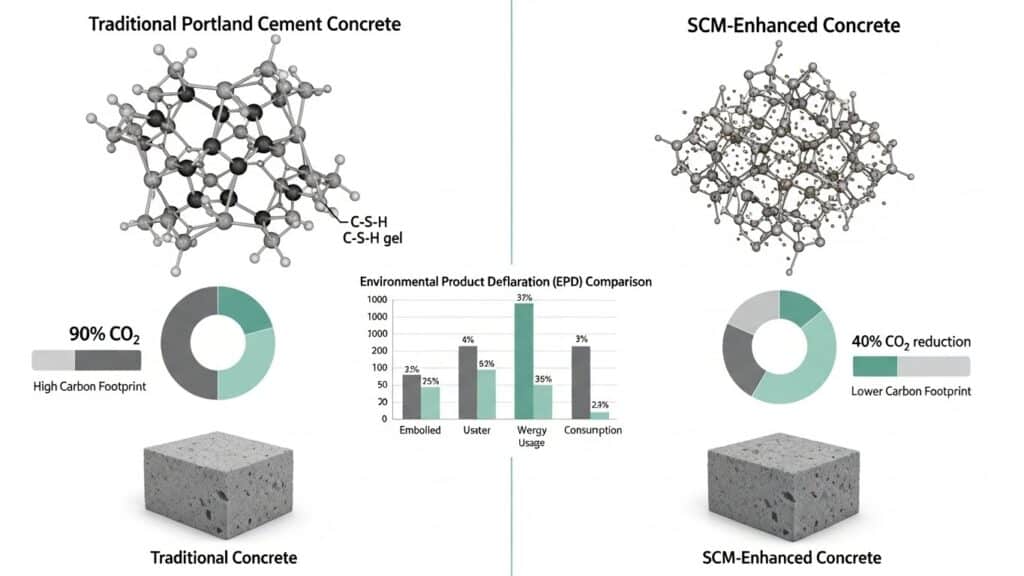
“We’ve seen projects reduce concrete carbon by 40% simply by specifying high-SCM mixes with verified EPDs. The data is there, the technology is proven, and the cost premium is minimal. There’s no excuse for using traditional high-carbon concrete anymore.”
Type IL Portland Limestone Cement
Type IL cement represents another breakthrough in concrete sustainability. This cement blends 10-15% ground limestone with traditional Portland cement. The limestone requires far less energy to produce than cement clinker.
Type IL cement performs equally well in most applications while reducing carbon emissions by 10-15%. Many manufacturers now publish EPDs for Type IL concrete mixes. These EPDs prove the environmental benefit while assuring engineers the material meets performance standards.
MYTH vs FACT: Concrete Edition
MYTH: Concrete with supplementary materials is weaker and less durable than traditional Portland cement concrete.
FACT: High-SCM concrete often performs better than traditional mixes. Fly ash concrete shows improved resistance to chemical attack and cracking. GGBFS concrete offers superior long-term strength development. Properly designed SCM mixes meet or exceed all structural requirements while cutting carbon emissions by 25-40%. EPDs prove both environmental and performance advantages.
Structural Steel & Rebar EPD: Building the Circular Economy
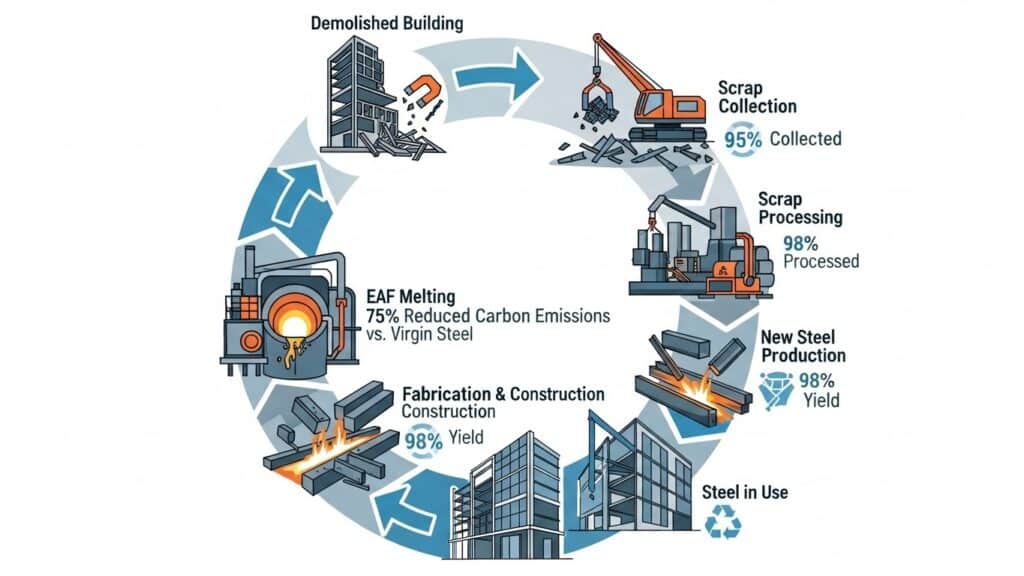
Steel forms the skeleton of modern buildings. Unlike concrete, steel offers excellent recycling potential. In fact, steel EPDs highlight the circular economy in action. Most structural steel contains 90% or more recycled content.
Electric Arc Furnace vs Blast Furnace Steel
The production method makes a huge difference in steel’s carbon footprint. Traditional blast furnace steel uses iron ore and coal. This process creates about 2 tons of CO2 per ton of steel produced.
Electric Arc Furnace (EAF) steel takes a different approach. EAF mills melt recycled scrap steel using electricity. When that electricity comes from renewable sources, carbon emissions drop dramatically. EAF steel typically produces 75% less CO2 than blast furnace steel.
Steel EPDs clearly identify the production method. Specifiers searching for low-carbon steel look for EAF products with verified EPDs. For projects pursuing LEED EPD certification for builders, choosing EAF steel provides significant advantages.
Product-Specific EPDs for LEED Credits
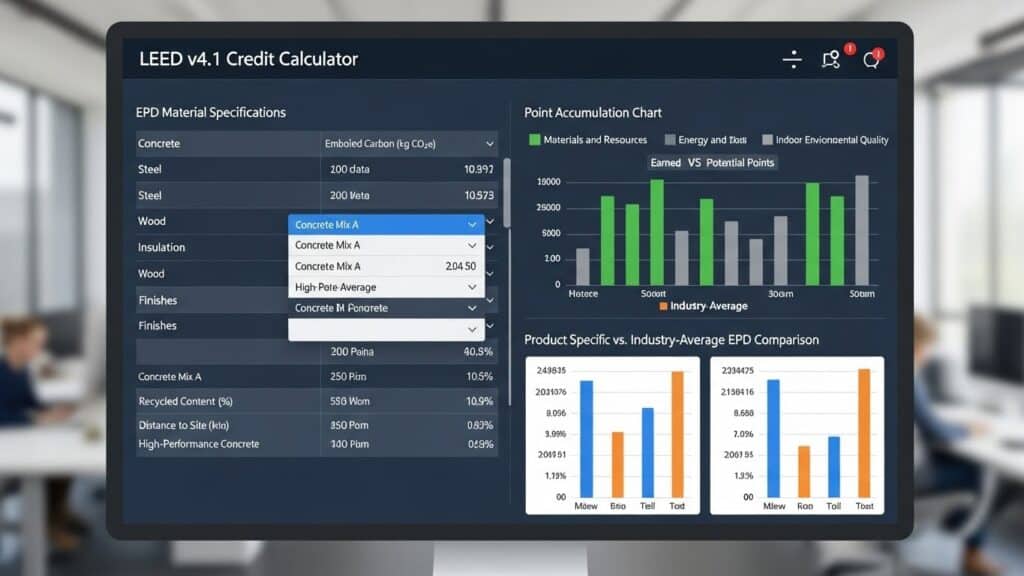
LEED v4.1 changed the game for steel and rebar. The certification now requires product-specific EPDs rather than industry-average data. A product-specific EPD reports actual data from a particular manufacturer’s facility.
This requirement pushes steel producers to optimize their processes. Manufacturers with cleaner operations can now prove their advantage. Meanwhile, contractors gain assurance they’re using genuinely low-carbon materials.
Aluminum & Glass Façades EPD: Energy Performance Matters
Building facades do more than look good. They control heat transfer, natural light, and energy consumption. EPDs for aluminum and glass explain how these materials affect building performance throughout their lifecycle.
Aluminum's Recycling Advantage
Aluminum production requires enormous amounts of electricity. Primary aluminum from bauxite ore creates about 12 tons of CO2 per ton of aluminum. However, recycled aluminum tells a different story.
Recycling aluminum uses only 5% of the energy needed for primary production. This means recycled aluminum has a carbon footprint 95% lower than primary aluminum. Quality aluminum EPDs show the recycled content percentage clearly.
Facade manufacturers increasingly use high-recycled-content aluminum. Their EPDs demonstrate environmental leadership while meeting structural requirements.
Understanding U-Value and SHGC in EPDs
Glass facade EPDs go beyond just carbon emissions. They include thermal performance metrics that affect building energy use for decades.
The U-value measures heat transfer through the glass. Lower U-values mean better insulation. High-performance glazing with low U-values reduces heating and cooling loads significantly.
Solar Heat Gain Coefficient (SHGC) measures how much solar heat passes through. In hot climates, low SHGC glass blocks unwanted heat. In cold climates, higher SHGC glass captures passive solar warmth.
EPDs that include these performance metrics help designers optimize both embodied carbon and operational energy. This complete picture supports truly sustainable building design.
Advanced glass facades can actually generate energy while insulating buildings. Photovoltaic glass combines solar power generation with thermal performance. EPDs for these products show negative carbon payback—meaning they offset more emissions than they create—within just 2-3 years of installation.
Insulation Materials EPD: Balancing Embodied and Operational Carbon
Insulation creates an interesting sustainability paradox. Manufacturing insulation uses energy and creates emissions. However, good insulation saves far more energy during building operation. EPDs help quantify this trade-off.
The Embodied vs Operational Carbon Trade-off
Most insulation materials pay back their embodied carbon within months of installation. A building might use 50 kg of CO2 to manufacture insulation for one wall. That same insulation could save 500 kg of CO2 annually through reduced heating and cooling.
Insulation EPDs typically show a 10-year lifecycle. Over this period, the operational savings dwarf the embodied carbon. This makes insulation one of the most climate-positive construction materials.
Blowing Agent GWP in Foam Insulation
Once verified, the EPD Foam insulations like PIR (Polyisocyanurate) and PUR (Polyurethane) offer excellent thermal performance. However, older foam products used blowing agents with high Global Warming Potential. Some traditional blowing agents had GWP values thousands of times higher than CO2.
Modern foam manufacturers switched to low-GWP blowing agents. Advanced EPDs specifically report the blowing agent type and its GWP value. This technical detail proves the manufacturer uses environmentally responsible processes.
Specifiers looking for sustainable insulation examine this data carefully. EPDs that show low-GWP blowing agents indicate a manufacturer committed to reducing climate impact.
Regional Considerations: EPDs in the UAE and Saudi Arabia
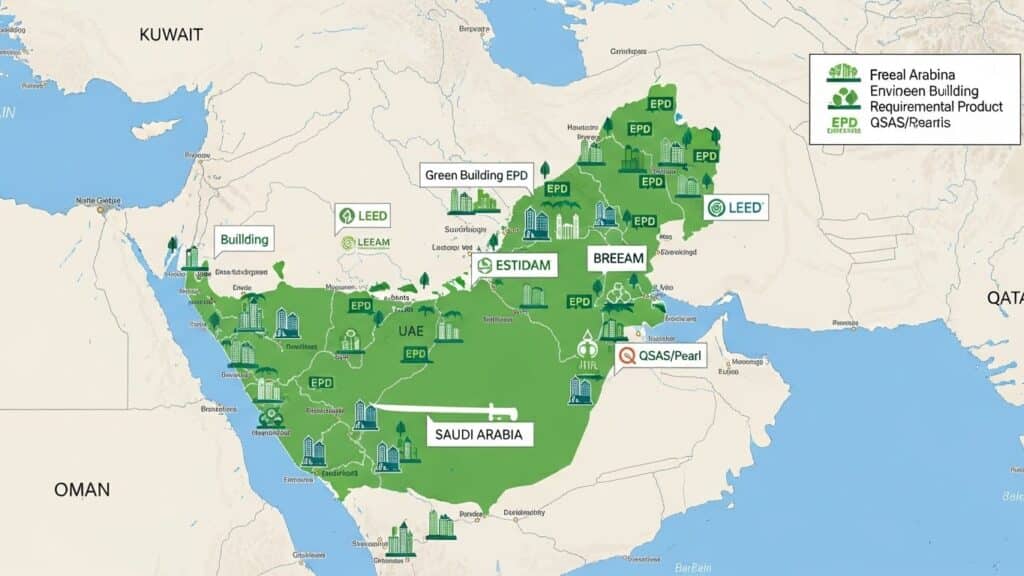
The Gulf region is rapidly adopting EPD requirements. Major projects in Dubai, Abu Dhabi, and Riyadh now prefer or require EPDs for construction materials. This shift reflects growing awareness of building sustainability.
Manufacturers serving the Gulf market need EPDs that meet both international standards and regional preferences. Some projects reference ISO 14025 standards specifically. Others follow green building programs developed by organizations like Emirates Green Building Council.
Getting an Environmental Product Declaration in Saudi Arabia or the UAE requires understanding local project requirements. Consultants familiar with regional markets can guide manufacturers through the process efficiently.
Key Takeaways
EPDs transform construction materials from black boxes into transparent, verifiable products. They provide the data needed to compare environmental impacts fairly. As green building standards evolve, EPDs become more essential for manufacturers and specifiers alike.
Concrete EPDs show how SCMs and limestone cement reduce carbon. Steel EPDs highlight the circular economy and EAF production benefits. Aluminum and glass EPDs connect materials to building energy performance. Insulation EPDs demonstrate the value of balancing embodied and operational carbon.
For manufacturers, investing in EPDs opens doors to green building projects. For contractors and consultants, understanding EPDs enables better material selection. Together, these tools push the construction industry toward genuine sustainability.
Glossary
Global Warming Potential (GWP): A measure of how much heat a greenhouse gas traps compared to CO2. Higher GWP means stronger climate impact.
Life Cycle Assessment (LCA): A systematic analysis of environmental impacts throughout a product’s entire life from raw materials to disposal.
Product Category Rules (PCR): Specific rules that define how to create EPDs for a particular product type, ensuring consistency and comparability.
Cradle-to-Gate: An LCA boundary that includes impacts from raw material extraction through factory gate, excluding transportation and installation.
Cradle-to-Grave: A complete LCA including all stages from raw materials through end-of-life disposal or recycling.
Supplementary Cementitious Materials (SCM): Materials like fly ash or slag that replace a portion of Portland cement to reduce concrete’s carbon footprint.
Electric Arc Furnace (EAF): A steel production method that melts recycled scrap using electricity, producing lower emissions than traditional blast furnaces.
U-Value: A measure of heat transfer through a material. Lower values indicate better insulation performance.
Solar Heat Gain Coefficient (SHGC): The fraction of solar radiation that passes through glass as heat. Lower values block more solar heat.
Embodied Carbon: The total carbon emissions from manufacturing, transporting, and installing a building material, excluding operational impacts.
Frequently Asked Questions
Creating an EPD typically takes 3-6 months. This includes conducting the Life Cycle Assessment, gathering production data, third-party verification, and publication. Rush services might complete EPDs in 6-8 weeks for an additional cost.
Small manufacturers benefit from EPDs just like large companies. Many green building projects require EPDs regardless of supplier size. Shared or industry-average EPDs cost less than product-specific ones and provide a starting point for smaller operations.
An LCA (Life Cycle Assessment) is the analysis process that measures environmental impacts. An EPD is the published document that communicates those results in a standardized format. Think of the LCA as the research and the EPD as the report.
EPD costs range from $15,000 to $50,000 depending on product complexity and verification requirements. Industry-average EPDs cost less than product-specific ones. Some program operators charge annual fees for maintaining published EPDs.
Yes, if it follows international standards like ISO 14025. However, some regional programs prefer locally verified EPDs. Projects in the UAE or Saudi Arabia may request EPDs that include regional transportation impacts or use local electricity grid data.
Most EPDs remain valid for five years from publication. After expiration, manufacturers must update the data and reverify. Some program operators offer simplified renewal processes if production methods haven’t changed significantly.
Concrete, steel, and insulation are top priorities because of their carbon impact and widespread use. However, EPD requirements now extend to nearly all construction materials including flooring, roofing, and MEP equipment.

