
Introduction: The Concrete Foundation of UAE's Green Vision
EPD for concrete in UAE shows verified environmental impact data.
It helps buyers trust your concrete products.
An EPD helps you win more building projects. Clients often ask for green certificates. Sustainable building materials UAE offers are more popular today. EPD for concrete in UAE also supports epds in uae across construction sectors.
We explain the epd certificate meaning in this guide. Read this guide to learn all key facts.
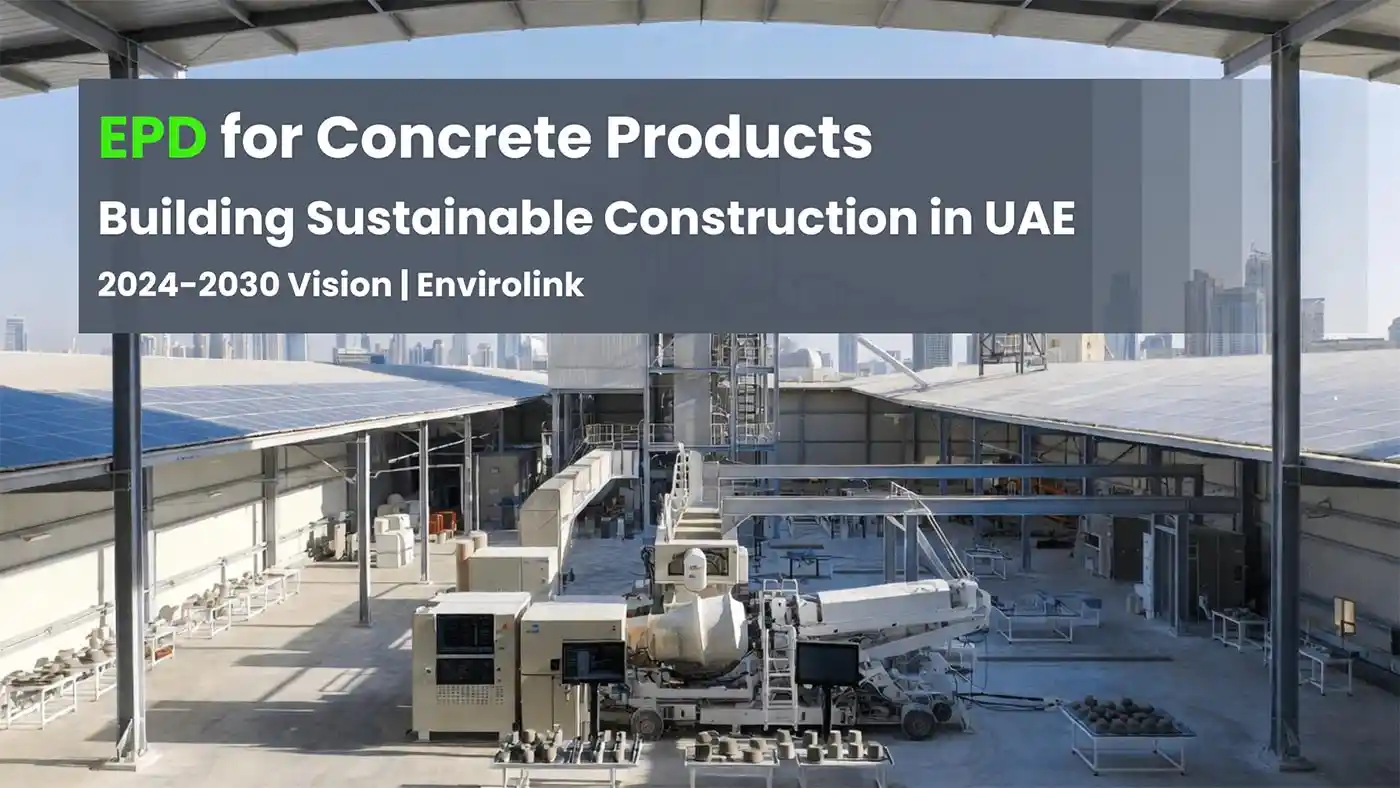
Did you know? The concrete industry alone accounts for approximately 8% of global CO2 emissions, which is why verified environmental data through EPDs has become a game-changer for sustainable construction in the Middle East.
What is an EPD and Life Cycle Assessment in Construction
Many builders ask, what is an epd in construction?
It is an Environmental Product Declaration report—a type III environmental declaration that provides standardized, third-party verified data.
It explains how your product affects the environment by detailing its environmental impacts and environmental performance across its entire life cycle.
This report explains your product’s impact in simple terms. It shows water, energy, and material usage for each product, and assesses the product’s environmental footprint.
An epd in construction builds trust with your clients by promoting environmental transparency.
More projects need certified, green products today.
An EPD proves your concrete is safe and environmentally responsible. This certificate helps you meet rising green project demands.
Why EPD for Concrete is Important in UAE
An epd for concrete in uae is now essential for regulatory compliance and market access. The UAE needs greener building options fast, and many developers want eco-friendly projects and safe concrete products that demonstrate strong sustainability credentials.
Projects in Dubai often require a concrete epd to meet both local and international standards. Abu Dhabi demands clean and safe building materials, and both cities prioritize eco-friendly products for new projects, making EPDs crucial for supporting sustainability certifications in the UAE construction sector.
An epd for concrete in uae protects the planet and demonstrates your company’s sustainability credentials. It shows buyers your real environmental impact, helping your company build better trust with clients by providing a competitive edge and supporting global sustainability standards.
Builders trust a verified environmental product declaration concrete report. EPDs are recognized in green building rating systems such as Estidama and Dubai Green Building Regulations, and are essential for compliance with local and international standards like ISO 14025 and EN 15804. You need epd certification uae for success in today’s market, as it helps you win more projects and grow faster.
Types of Concrete Products Covered Under EPD
Many construction materials require an epd for concrete in uae, especially those used in the building and construction sector.
Precast walls use a concrete epd for certification, supporting sustainable practices in the building and construction sector and helping projects achieve green certifications.
Blocks and pavers also need epd development uae for certification, ensuring these construction materials meet environmental standards.
Even cement bags require an environmental product declaration concrete report now.
Plants in UAE make ready mix concrete every day. This wet concrete needs a clear EPD report for certification. It helps show your product meets green standards.
Pipes and slabs also need epd certification uae. You can include these construction materials in your EPD report easily. This covers most concrete items made in UAE today, supporting transparency and sustainability in the building and construction sector. This also includes epd for concrete products used in UAE projects.
EPD for Cement and Precast Concrete in UAE
Cement plants in UAE produce key materials for construction. They need a concrete EPD to prove environmental responsibility. An environmental product declaration for concrete covers the entire manufacturing process, including waste management, energy consumption, resource depletion, and provides real impact data.
Precast concrete factories in Dubai make walls, slabs, and pipes. These factories use concrete EPDs to meet green building rules. EPDs report on greenhouse gas emissions and are critical for monitoring embodied carbon, which accounts for approximately 8% of global CO2 emissions from the concrete industry. EPDs help them show their products are sustainable building materials UAE demands and support alignment with national sustainability goals such as the UAE Net Zero 2050 vision.
Large infrastructure projects in Abu Dhabi require certified materials. Using EPD-certified cement and precast concrete supports project approvals. It ensures compliance with UAE’s strict environmental and safety standards.
EPD is important for these sectors to reduce carbon emissions. It improves transparency and helps companies compete in Dubai’s market. Choosing products with EPDs supports a sustainable future in UAE construction.
Reducing the Carbon Footprint of Precast and Ready-Mix Concrete
EPD for concrete in UAE plays a key role in reducing carbon emissions by providing clear and verified data on the product’s environmental impact. It covers the product’s entire life cycle, from raw material extraction to production and transport, helping companies identify where they can cut emissions.
Low carbon concrete uses alternative materials like fly ash, slag, or silica fume to replace cement. Efficient production methods and optimized aggregate sourcing reduce energy use and transport emissions. Improved curing techniques and waste heat recovery also boost energy efficiency.

Many UAE concrete manufacturers are adopting these strategies to meet sustainability goals in Dubai and Abu Dhabi. Using EPD data, they improve environmental performance and support green building certifications like LEED. This helps companies compete in the growing market for sustainable construction materials in the UAE.
EPD Certification Process in UAE
The EPD process in the UAE follows clear steps to ensure trust and compliance. First, collect accurate data from your concrete plant. This data forms the base for a life cycle assessment (LCA). The LCA measures your product’s environmental impact. It follows standards like ISO 14025, EN 15804, and ISO 21930. The LCA covers all stages: raw material, production, transport, use, and disposal. It provides key data like carbon footprint, energy use, and waste.
Next, follow the product category rules set in the UAE. These rules guide how to report your product’s impact. They ensure your EPD is reliable and comparable.
After preparing the LCA and EPD documents, get third-party verification. Accredited experts check your data and compliance. Verified data makes your EPD credible. Many construction epd dubai projects now require third-party verification.
Did you know? LEED v4 and v4.1 specifically reward projects that use products with EPDs through the Materials and Resources credits, potentially contributing up to 4 points toward certification.
Once verified, submit your EPD to program operators. These include international bodies like EPD International. The operator reviews your submission for rules compliance. After approval, they issue your EPD certificate and publish the document. This ensures transparency for all stakeholders.
An EPD has key parts: the LCA report, public EPD document, and verified data. It follows international standards for accuracy. Certification often requires an EPD. In the UAE, EPDs are valid for five years.
Designers and contractors use EPDs to compare products. They gain sustainability credits for projects. EPDs help improve environmental performance. They show your company’s responsibility. They support green building certifications. EPDs boost your market strength in the UAE.
EPD Cost in UAE for Concrete Products
You want to know the epd cost in UAE. The epd cost changes based on your product type. Each concrete product has a different epd cost and fee.
A simple epd for concrete in uae has a lower cost. More complex products make the epd cost higher for you.
The estimated epd cost in UAE ranges from AED 15,000 to AED 50,000. Small plants or simple products pay less. Large plants with many products pay more.
Factors affecting epd development uae cost include plant size, product type, and data complexity. More data means more work and higher costs. Different concrete products need different assessments.
The epd cost varies because each project is unique. Some plants have detailed records, lowering costs. Others need more data collection and analysis. You pay for data collection, expert advice, and epd dubai verification fees. These costs ensure your report is accurate and valid.
Investing in epd development uae helps you save money over time. It builds trust and wins more projects in the UAE market. Verified EPDs can also increase your product’s market value by enhancing credibility and recognition.
EPD for Ready Mix Concrete in UAE
Ready mix concrete is popular in UAE for many projects. n epd for concrete in uae covers this product type well. Builders choose it because it meets green and safety standards.
Plants in Dubai mix this concrete every day. An epd dubai report shows its real environmental impact well. Clients trust verified reports for ready mix concrete in all projects, especially as EPDs appeal to environmentally conscious consumers and help build strong relationships with business partners by demonstrating environmental responsibility.
Builders use it for tall towers and homes across the UAE. They need an epd for concrete in uae for all projects. This report helps clients trust your ready mix concrete every time. Concrete water quality UAE also impacts environmental performance results.
An environmental product declaration concrete proves the product is eco-friendly. Show your epd dubai documents in all your projects. This builds trust and meets UAE green building standards.
Benefits of EPD for Construction Companies in UAE
- An epd for concrete in uae helps you win major government and private projects fast.
- You can join green projects by showing your certified EPD report.
- Supplying LEED concrete for green building projects in UAE boosts your reputation.
- An epd in construction shows your commitment to the environment and clients.
- Your concrete epd builds strong trust with buyers and local partners in Abu Dhabi.
- Certified EPDs raise your sales and help you stand out in the Dubai market.
- EPDs are a critical tool for accessing global markets and meeting the requirements of international environmental labels.
- It supports sustainable building goals and helps meet UAE regulations.
- EPDs support sustainable development goals in the UAE construction sector.
- Having an epd gives you a competitive advantage in the UAE construction sector.
- Supports epd for construction materials in UAE projects
EPD vs HPD in UAE
People compare EPD in construction with HPD reports. An EPD communicates the product’s environmental impact throughout its entire life cycle and serves as a recognized environmental label in the construction sector, while an HPD focuses on health-related information.
| Feature | Environmental Product Declaration (EPD) | Health Product Declaration (HPD) |
|---|---|---|
| Scope | Entire environmental impact across product lifecycle | Focuses on human health risks only |
| Focus | Carbon footprint, resource use, waste generation—comprehensive product’s environmental impact | Lists potential health hazards in the product |
| Usage in UAE construction | Mostly required for concrete and green projects | Less commonly required |
| Supports | Sustainable building materials UAE goals; recognized as environmental labels for transparency and compliance | Transparency on human health impacts |
| Product coverage | Concrete, cement, precast, and other materials | Materials with health-related concerns |
| Importance | Critical for green project approvals, compliance, and demonstrating environmental responsibility | Supplemental for health-related information |
Glossary: Essential EPD & Sustainability Terms
1. Environmental Product Declaration (EPD): A standardized, third-party verified document that communicates the environmental performance of a product throughout its lifecycle, following international standards like ISO 14025.
2. Life Cycle Assessment (LCA): A comprehensive analysis method that evaluates the environmental impacts of a product from raw material extraction through production, use, and end-of-life disposal (cradle-to-grave) or to factory gate (cradle-to-gate).
3. Global Warming Potential (GWP): A metric that measures the total greenhouse gas emissions associated with a product, expressed in kilograms of CO2 equivalents. This is the primary indicator for a product’s carbon footprint.
4. Cradle-to-Gate: A lifecycle assessment boundary that measures environmental impacts from raw material extraction through manufacturing and delivery to the factory gate, excluding use phase and disposal.
5. Product Category Rules (PCR): Specific guidelines that ensure EPDs for similar products follow consistent methodologies, making environmental comparisons meaningful and reliable across different manufacturers.
6. Embodied Carbon: The total greenhouse gas emissions generated during the extraction, manufacturing, transportation, and installation of a building material, excluding operational emissions during use.
7. Supplementary Cementitious Materials (SCMs): Alternative materials like fly ash, slag, or silica fume that partially replace Portland cement in concrete mixes, significantly reducing carbon emissions while maintaining or improving performance.
8. Third-Party Verification: Independent review by an accredited organization to validate that EPD data, methodology, and calculations comply with relevant standards and accurately represent the product’s environmental performance.
9. ISO 14025: The international standard that establishes principles and procedures for developing Type III environmental declarations (EPDs), ensuring consistency and credibility across different products and regions.
10. Decarbonization: The process of reducing carbon dioxide emissions associated with production, construction, and operations, typically through energy efficiency, material substitution, renewable energy adoption, and process optimization.
Frequently Asked Questions
It means an Environmental Product Declaration document. It shows your product’s real environmental impact, and has been used in numerous projects across the UAE to demonstrate sustainability. This helps buyers understand your goods better and supports continuous improvement in environmental performance.
The epd cost changes with each product’s complexity. An expert will give you the exact epd cost for your project.
A Life Cycle Assessment (LCA) is the detailed study that measures a product’s environmental impacts across its full lifecycle. An EPD takes that LCA data and presents it in a standardized, third-party verified format. Explore the key differences between EPD and LCA in our detailed guide.
Start by gathering your plant production data first. Then follow EN 15804 rules closely for every step. Read our detailed guide on how to get an EPD in UAE.
A concrete EPD is typically valid for five years from the date of publication. After this period, manufacturers must update and reverify their EPD to ensure the environmental data reflects current production processes, material sourcing, and any improvements made. Some program operators may have slightly different validity periods, but five years is the industry standard. Regular updates also allow manufacturers to demonstrate continuous environmental performance improvements.
Yes. LEED projects need an epd for concrete in uae for approval. It helps you earn points for green certification every time. learn more about EPD for LEED certification.
The initial cost of developing an EPD involves fees for LCA studies, program registration, and third-party verification, typically ranging from a few thousand to tens of thousands of dirhams depending on product complexity. However, this cost is generally spread across large production volumes, resulting in minimal per-unit price increases. More importantly, EPDs often reveal cost-saving opportunities through process optimization and can command premium pricing in green building markets, making them a net positive investment for most manufacturers.


